
Asking for directions is the first thing we do when we arrive to a different country, or even when we are just trying to find a place. Knowing how to ask for them can make our life so much easier!
The way we ask for directions may affect the answer we get. Luckily, Canadians are known for being very polite and helpful. Here are some tips you can use when you need to get from place A to place B.
1. Use Greetings and Polite Expressions
Starting the conversation with a greeting is a must. If you want to receive a nice explanation, begin by saying hello first.
Examples:
Hello! Good Afternoon!
Excuse me, could you help me?
Hello! May I ask for some help? I need to get to the CN Tower
Tip: Finish with a “thank you” and “have a nice day”.
2. Modal Verbs Will Help You Express Yourself

Examples:
May I ask you how to get to the Eaton Centre?
Could you help me?
I would like to go to the Royal Museum.
3. Build Your Vocabulary
You should know the basic vocabulary that can be used when getting directions. It may be useful to remember frequently visited places too!
Examples:
Places: High Park, Dundas Square, Queen Street, Union Station.
Vocabulary: Traffic lights, bank, post office, constructions, block.
It’s about two blocks from here.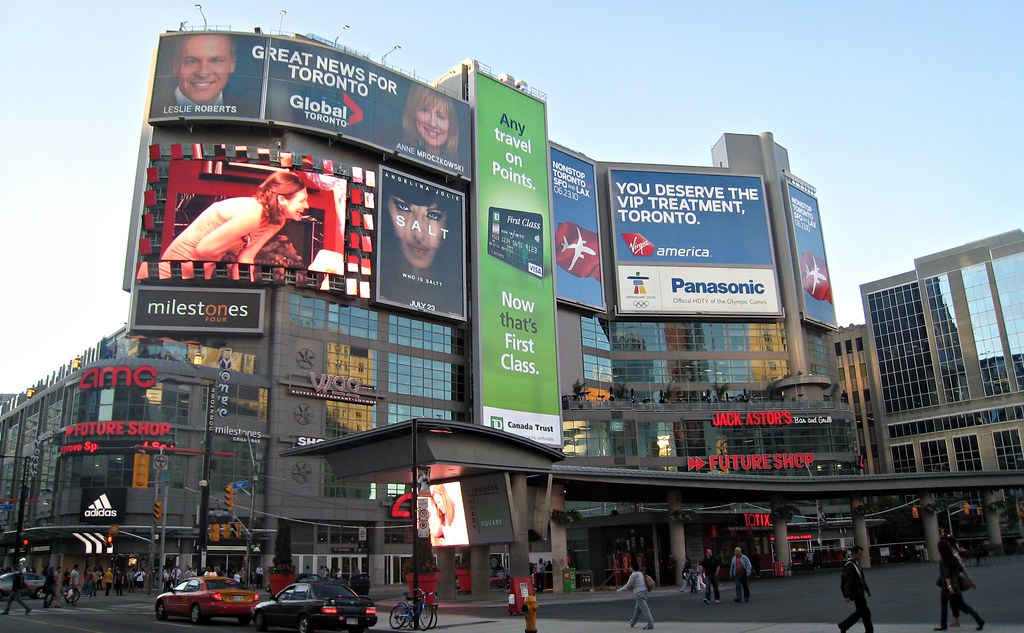
Go along the street until you reach the traffic lights.
You will see construction on the road.
That place is very close to Dundas Square.
4. Know How to Ask a Question
Use the right words and adverbs! Try not to leave any information out, if you ask a specific question there are more chances of getting a specific answer.
Examples:
How can we get to High Park?
Where is Chinatown? Where am I on this map?
Which subway line should I take to get to the Rogers Centre?
5. Get to Know the Transportation System
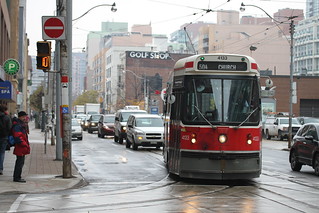 Sometimes, it can happen that you are still far from your destination and you have to take the public transit. Which types of public transportation are most commonly used in Canada? The three most common types are streetcars, buses and the subway. You should also use specific verbs and prepositions with them.
Examples:
Is it far? No, it isn’t very far. It will take you 10 minutes to walk there.
Well, it is quite far. You’d better take the streetcar.
Take the streetcar / take the bus / go by streetcar / go by bus
Take the streetcar number ___ / take the bus number ___
Get on at ____ station/street/stop
Change at ____station/street/stop
Change to the yellow/green subway line
6. Familiarize Yourself with the Cardinal Points
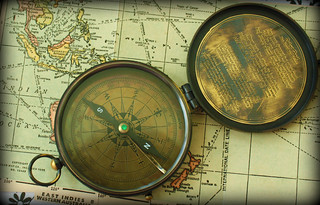
In big cities, people often use cardinal points when explaining directions and locations. The cardinal points are North, South, East and West.
Examples:
“At the foot of John Street, on the south side of Front Street, there’s a set of stairs that takes you to the entrance of the CN Tower.”
7. Learn the Most Commonly Used Prepositions and Adverbs of Place
Some important prepositions to remember when getting or giving directions are:
- Between
- Left and Right
- Next to
- Straight Ahead
And the adverbs near, nearer, nearest and close, closer, closest will be very useful when you need to find something fast.

Examples:
Go straight ahead, then turn right at the crossroads.
Please, where is the closest police station?
8. Use Imperative Sentences When Giving Instructions
And expect people to use them when explaining to you where to go.
Examples:
Go down this street!
Go straight and up the stairs!
Go down the escalators!
9. Don’t Be Afraid of Using Landmarks
Every city in the world has its own landmarks. You can cut down on search time if you know what the important landmarks are in the city or place you are visiting. For example, in London, England, the main landmark is Big Ben.
Some landmarks in Toronto are the Eaton Centre, the CN Tower, and the Rogers Centre.
Examples:
The Aquarium is next to the CN Tower!
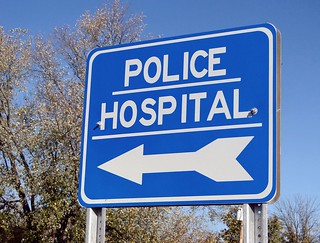
Go past the hospital and then turn left.
After the supermarket, you will see the bus stop.
10. Know Where Your House or Residence is on a Map
Before you go on a trip, check first where your house is located on a map. Find it and mark it! It is important to know where you live.
Learn to forgive yourself if you get a little lost. We all do that now and then, especially when exploring a new city!
Gabriela Jandova
[mlw_quizmaster quiz=8]
